
Focus on Feed Additions Global Supply
-13 Years in the Feed Additives Market.
Hotline+86 13821675082
Focus on Feed Additions Global Supply
-13 Years in the Feed Additives Market.

 Hotline +86 13821675082
 Tel:+8613661236356
Email:sales@yeastpowderco.com
Add:Rm603 Central building, Xinmao Huayuan Park, Xiqing Dist., Tianjin China-300392
application
Feed grade beer yeast, as an efficient and environmentally frien...
Hotline+86 13821675082
Product Details
Feed brewer’s yeast, as an efficient and environmentally friendly source of functional protein, has demonstrated wide application in livestock farming and aquaculture worldwide. Its nutritional characteristics and functional active ingredients make it an ideal alternative to traditional protein sources and antibiotics, especially for improving animal productivity, intestinal health, and environmental sustainability. The following systematically reviews its main application areas from the perspectives of scientific evidence and practical use:
The application of feed brewer’s yeast in pig feed has been confirmed by numerous experimental studies. Research has shown that adding 1% high-peptide brewer’s yeast culture to the diet of weaned piglets can significantly increase average daily weight gain by 14.92% (P < 0.05), while simultaneously increasing feed intake by 13.51%. This effect is attributed to the functional peptides and nucleotides in yeast, which directly participate in intestinal mucosal repair and immune regulation. In addition, the β-glucan in brewer’s yeast can promote the proliferation of intestinal Lactobacillus and Bifidobacterium. For example, adding 1% primary brewer’s yeast culture can increase Lactobacillus counts in feces by 14.47% and Bifidobacterium by 7.58%, effectively reducing the incidence of diarrhea.
For finishing pigs, adding 5% brewer’s yeast can increase weight gain by 20% and improve feed conversion ratio by 15%. This is due to the high-quality protein content of yeast (more than 50%, with crude protein ranging from 45–61%) and its balanced amino acid profile, with lysine content reaching 6.4%, which is significantly higher than traditional plant protein sources. At the same time, the organic chromium in yeast can improve insulin sensitivity, promote fat metabolism, and support an optimized growth model of “increased lean meat and reduced fat.”
In ruminant farming, brewer’s yeast provides multiple benefits through regulation of rumen microbiota. Studies have shown that adding yeast culture to dairy cow diets can increase daily milk yield by 0.5–1.5 kg, improve milk fat content by 0.2–0.4 percentage points, and reduce the feed-to-milk ratio by 0.05–0.15. This effect is closely related to the stimulation of rumen fiber-degrading bacteria activity and enhanced volatile fatty acid production caused by yeast. For example, supplementing 150–200 g/head/day of yeast culture can increase cattle weight gain by 7.5% and improve feed digestibility by 10%.
Brewer’s yeast also demonstrates excellent performance in reducing nitrogen emissions in ruminants. The mannan in the yeast cell wall can adsorb ammonia nitrogen in the rumen, reducing ammonia emissions from manure by 20–30%. Recent studies have also shown that hop compounds in spent brewer’s yeast can inhibit methanogenic bacterial activity, reducing methane production by 25% in vitro, with effects comparable to monensin, providing a new pathway for carbon reduction in livestock farming.
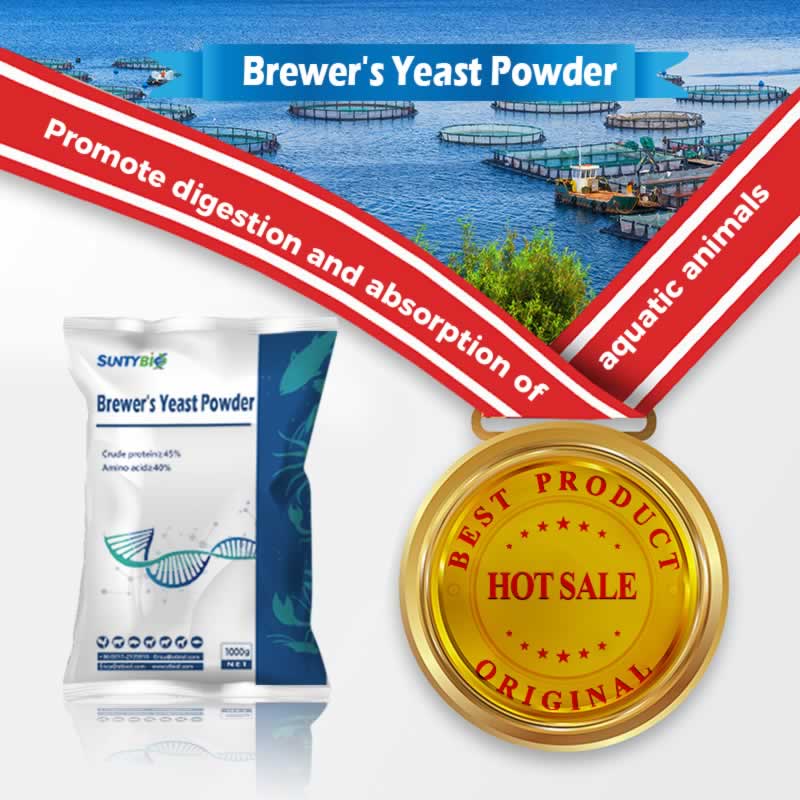
The application of feed brewer’s yeast in aquaculture offers multiple advantages. Adding 10% brewer’s yeast powder to shrimp feed can increase survival rates by 15–20% and reduce white spot syndrome virus infection rates by 40%. This is mainly attributed to the β-glucan and mannan oligosaccharides in the yeast cell wall, which enhance nonspecific immunity by activating macrophages and the complement system. In addition, the natural feeding attraction properties of yeast can increase feed intake of aquatic animals by 10–15% and promote growth.
In terms of water quality regulation, brewer’s yeast can significantly reduce ammonia nitrogen and nitrite concentrations in water. Studies have shown that adding 2% fermented brewer’s yeast can reduce ammonia nitrogen levels in aquaculture water by 30–40% and nitrite levels by 25–35%. This effect is achieved through the decomposition of organic waste by yeast and competitive inhibition of harmful bacteria, while extracellular enzymes produced by yeast (such as amylase and protease) improve feed utilization and reduce residue accumulation.
Brewer’s yeast plays an important role in poultry feed as both a nutritional supplement and an immune regulator. Adding 5–10% brewer’s yeast to laying hen diets can increase egg production by 8–12% and reduce egg breakage rates by 15%. This is closely related to the abundance of B vitamins (such as riboflavin and pantothenic acid) and trace elements (zinc and selenium) in yeast, which participate in follicle development and eggshell formation. For broiler chickens, supplementing 1000 mg/kg of live brewer’s yeast can increase antibody titers against Newcastle disease and infectious bursal disease by 20–30%, while reducing feed conversion ratio by 5–8%.
The quality control of feed brewer’s yeast follows international standards, such as the Chinese “Feed Raw Material Brewer’s Yeast Powder” standard (NY/T 3970-2021), which specifies that crude protein content should be ≥ 40% and moisture content ≤ 12%. Production processes include enzymatic hydrolysis, cell wall disruption, spray drying, and other technologies to ensure efficient preservation of active ingredients (such as β-glucan ≥ 20%).
Feed brewer’s yeast not only improves animal growth performance and health status, but also helps reduce antibiotic use and environmental pollution, making it an important component of sustainable livestock and aquaculture development. With the advancement of biotechnology and green agriculture, feed brewer’s yeast is expected to play an even greater role in the future global feed industry.
Previous article:Application fields and scientific evidence of feed grade brewing yeast
Next article:Compound Bacteria for Animal Feed
Related Recommendations