
Focus on Feed Additions Global Supply
-13 Years in the Feed Additives Market.
Hotline+86 13821675082
Focus on Feed Additions Global Supply
-13 Years in the Feed Additives Market.

 Hotline +86 13821675082
 Tel:+8613661236356
Email:sales@yeastpowderco.com
Add:Rm603 Central building, Xinmao Huayuan Park, Xiqing Dist., Tianjin China-300392
Release time:2026-07-23 Click here:106Second-rate
Over the past one to two years, the global market for functional yeast-based feed ingredients has shown a clear pattern of accelerating expansion. By source, yeast-based inputs are projected to account for 34.0% of global demand for functional feed supplements in 2026 — a position of strength driven largely by fermentation traceability and an already well-established base of use within feed additive programs。
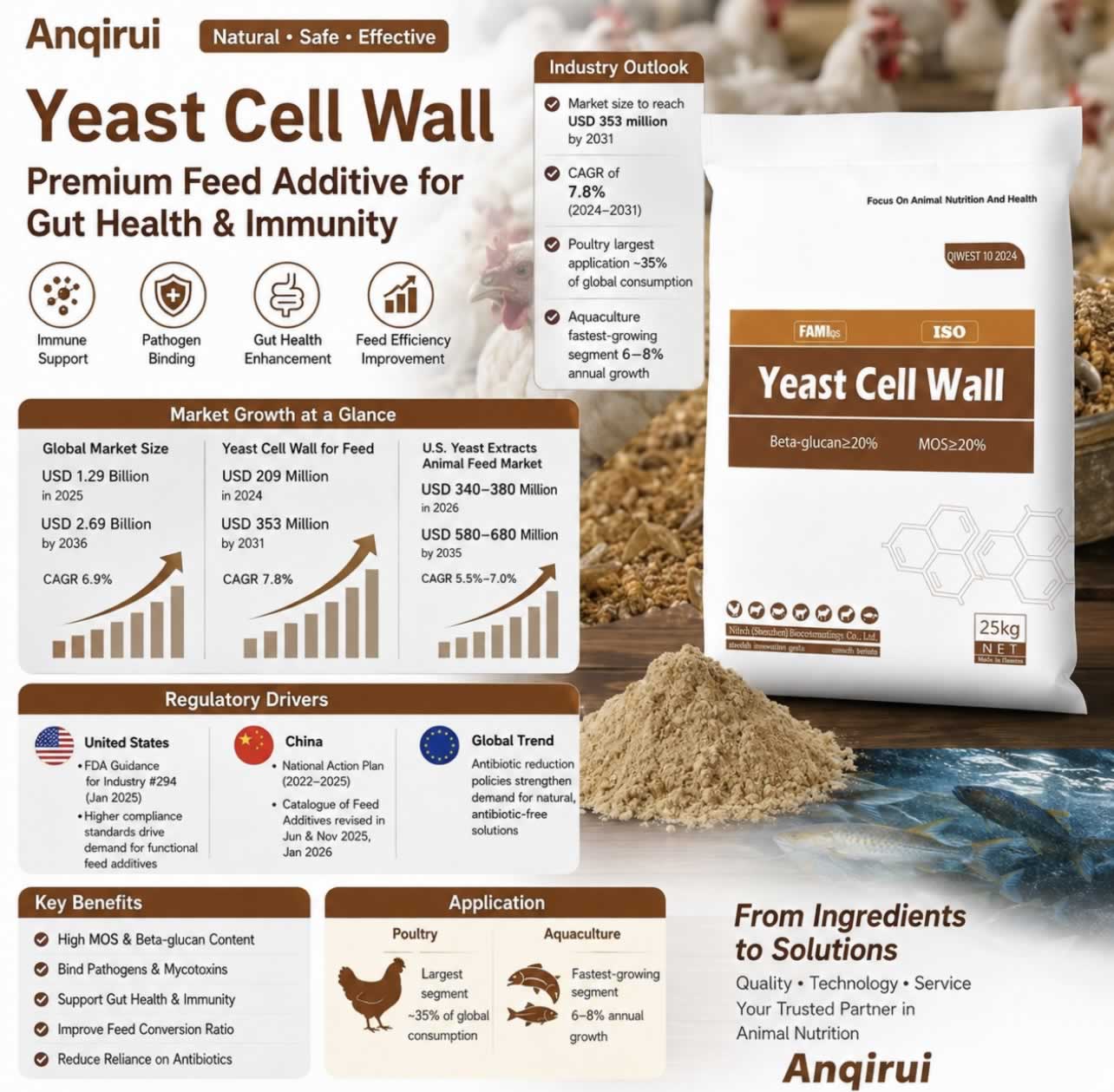
Global Market Evolution: The global yeast-based feed supplements market was valued at approximately USD 1.29 billion in 2025, is projected to grow to USD 1.38 billion in 2026, and is expected to expand at a CAGR of 6.9% to reach approximately USD 2.69 billion by 2036.
Yeast Cell Wall Segment: The global yeast cell wall for feed market was valued at approximately USD 209 million in 2024 and is forecast to grow to USD 353 million by 2031, at a CAGR of roughly.
Regional growth trends tell a consistent story — the U.S. yeast extracts animal feed market is valued at approximately USD 340–380 million in 2026 and is projected to grow to USD 580–680 million by 2035, at a CAGR of 5.5%–7.0%, with volume expected to reach 135,000–160,000 metric tons.
By form, dry formats are projected to account for approximately 36.5% of market demand in 2026, largely due to their compatibility with premix storage bins and batch weighing systems — a key reason why yeast cell wall products, typically distributed in powder form, continue to gain traction at the feed mill level.
Regulatory tightening remains the core structural driver behind rising demand for functional ingredients like yeast cell wall.
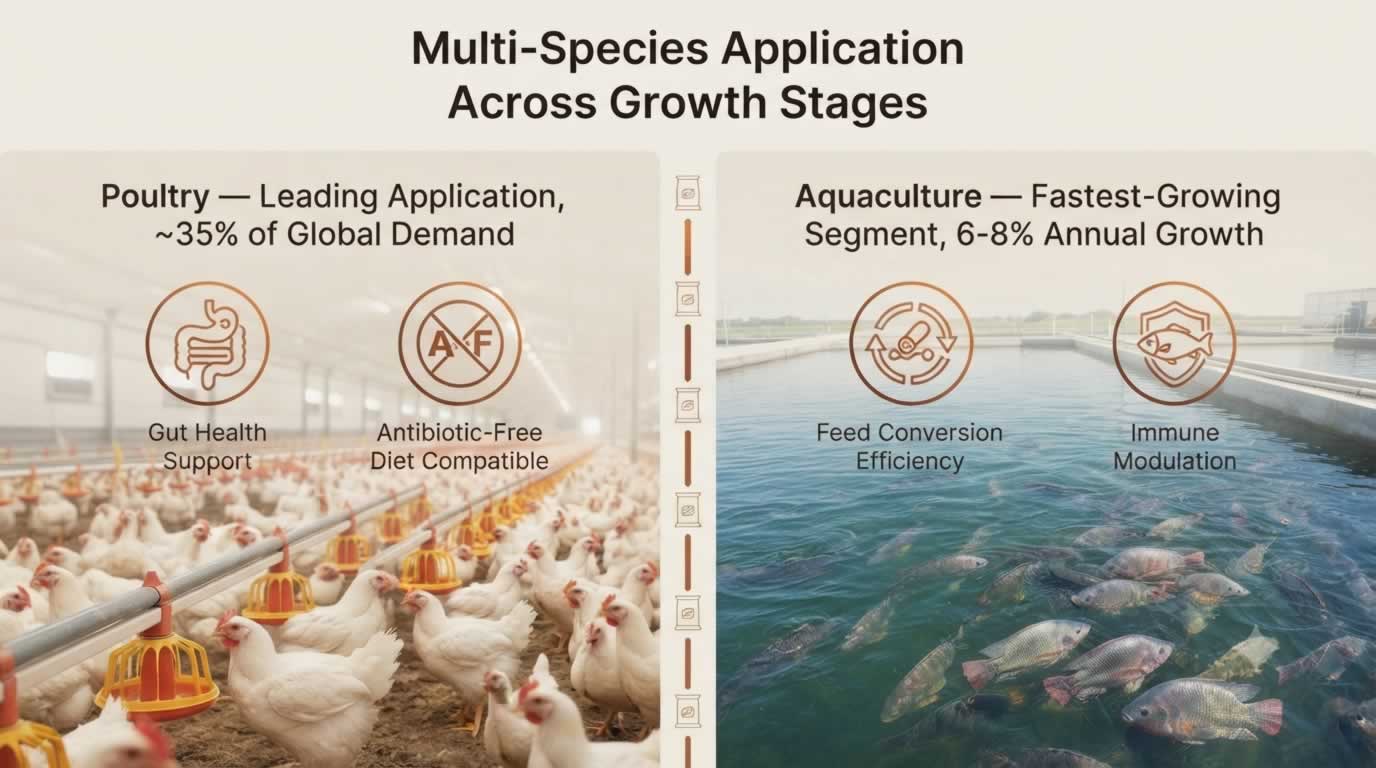
Ongoing FDA regulatory activity around antibiotic use is indirectly supporting demand for functional feed additives such as yeast extracts. In January 2025, the FDA formally issued Guidance for Industry #294, further sharpening review standards for animal food ingredients; in January 2026, the FDA updated animal food ingredient information once again. This signals a rising compliance bar for feed additives — and, correspondingly, a growing relative advantage for ingredients with clear, well-documented functional mechanisms, such as yeast cell wall.
Antibiotic-reduction policy continues to deepen as well. Since 2020, China has fully banned the addition of antibiotic growth promoters to feed. In 2022, thirteen government bodies — including the National Health Commission and the Ministry of Agriculture and Rural Affairs — jointly issued the National Action Plan to Contain Antimicrobial Resistance (2022–2025), driving the reduction and prudent use of antimicrobial agents through a comprehensive governance strategy. Through 2025 and into 2026, the official Catalogue of Feed Additives has continued to be revised: according to Ministry of Agriculture and Rural Affairs announcements, revisions were issued in June 2025, November 2025, and January 2026 — reflecting an ongoing, increasingly routine process of regulatory review and standardization for functional additive categories.
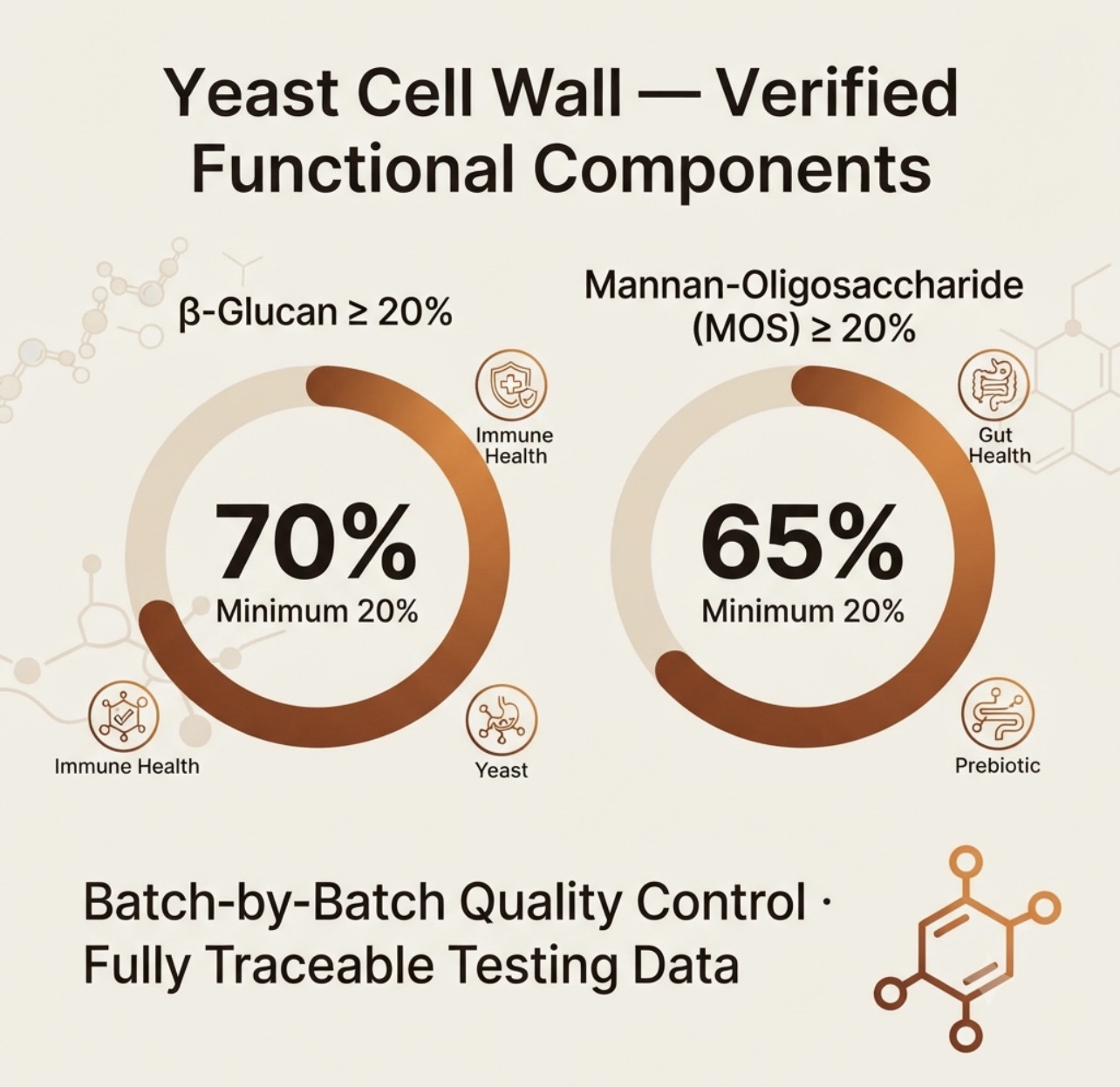
Regulatory restrictions on antibiotic growth promoters continue to intensify across the EU, U.S., and increasingly across Asia-Pacific, alongside rising consumer demand for antibiotic-free, organic, and sustainably produced meat, dairy, and eggs. Together, these forces continue to drive greater awareness and adoption of yeast-derived functional components — particularly mannan-oligosaccharides (MOS) and beta-glucans found in yeast cell wall fractions.
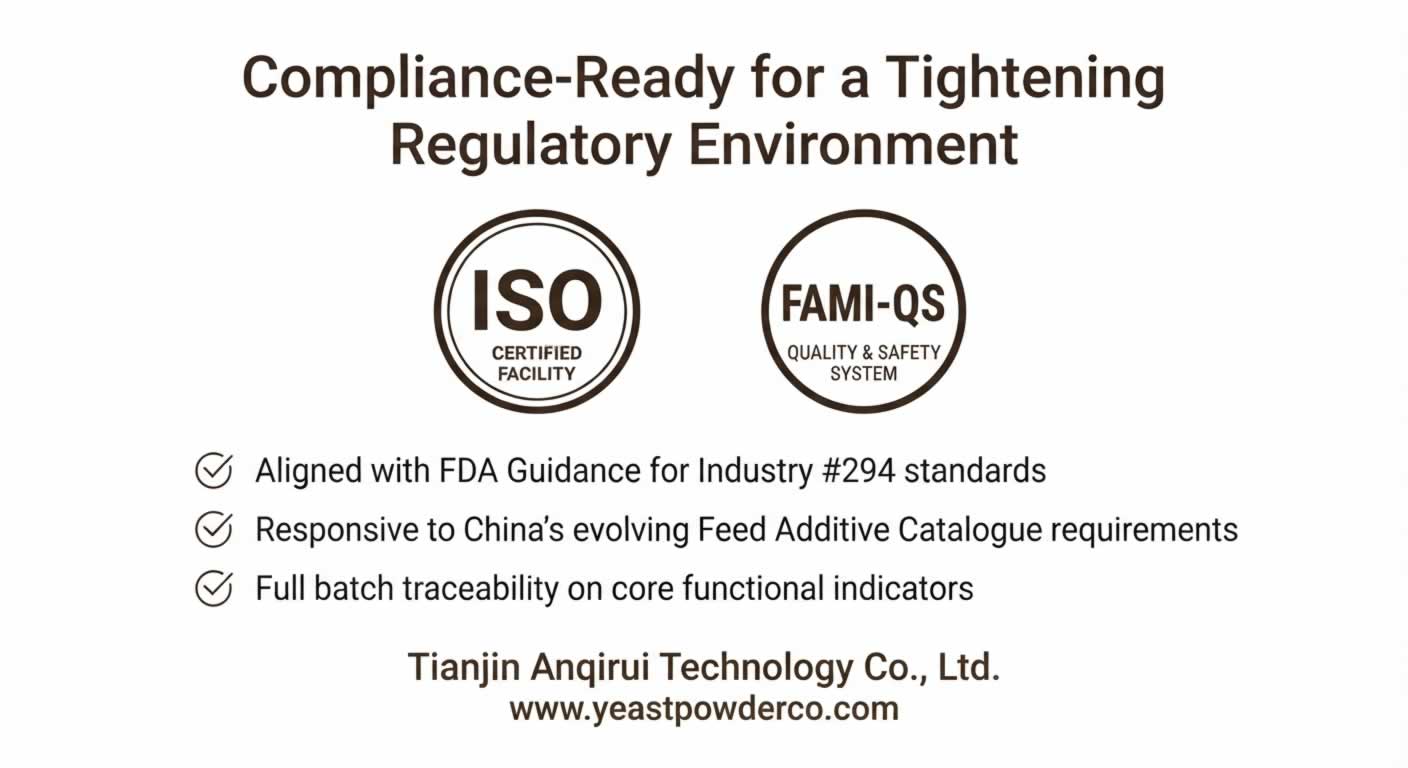
By end-use, poultry feed remains the largest application segment for yeast-based functional supplements, accounting for approximately 35% of global consumption[span_5](start_span)[span_5](end_span). This reflects the high density and scale of poultry production systems, where gut health has an outsized impact on feed conversion efficiency and flock uniformity[span_6](start_span)[span_6](end_span). At the same time, the accelerating shift toward antibiotic-free broiler production across Europe, North America, and parts of Asia is prompting more integrators to specify yeast-based products as a standard component of starter and grower diets.
Mechanistically, the mannan-oligosaccharide (MOS) and beta-glucan fractions in yeast cell wall are widely used to bind pathogens and modulate immune response, reducing reliance on antibiotic treatment — this remains the core rationale behind its continued penetration into antibiotic-free feeding systems.
Notably, in the U.S. market, aquaculture feed is the fastest-growing end-use category for yeast extract products. As domestic aquaculture continues to expand and feed efficiency requirements become more stringent, this segment is expected to maintain 6%–8% annual growth, making it an important source of incremental demand for the industry going forward.
The global competitive landscape for yeast-based feed supplements remains relatively fragmented but is undergoing continued consolidation. Large animal health distributors are steadily expanding their biological additive portfolios, and the top ten distributors currently account for an estimated 45%–55% of the global yeast supplement market.
At the same time, yeast ingredient manufacturers are shifting from traditional commodity fermentation supply toward higher-value, functional yeast solutions. Animal feed producers are increasingly incorporating yeast cell wall components both to support gut health and to bind mycotoxins within feed. This trend reflects a broader industry shift — from yeast as a “single-function supplement” toward yeast as a “multifunctional technology platform ingredient.”
These industry dynamics point to four converging demands the market is placing on yeast cell wall ingredients — and these are precisely the areas where Anqirui has focused sustained investment:
With FDA Guidance #294 and China’s repeatedly revised feed additive catalogue, ingredients lacking consistent, traceable test data face growing compliance risk.
Industry research consistently points to a knowledge and technical gap among smaller feed mills in developing regions regarding optimal dosage and strain selection for yeast-based ingredients.
As leading distributors accelerate their consolidation of market share, relying on ingredient supply alone is no longer sufficient to sustain long-term competitiveness.
Poultry diets prioritize gut health support, while aquaculture feed places greater emphasis on feed conversion efficiency.
Taken together, developments over the past one to two years point to an increasingly clear growth logic for yeast cell wall as a functional feed ingredient category: tightening regulation on the policy side continues to create structural tailwinds for natural antibiotic alternatives; market growth remains steady, in the high-single to near-double-digit CAGR range; application patterns show poultry in the lead with aquaculture accelerating; and competition is shifting from “selling ingredients” toward “selling solutions”.
For feed producers and livestock operations, yeast cell wall has moved from being an optional ingredient to a standard component of antibiotic-free diet formulation. For Anqirui, this represents both an industry opportunity and a continued direction of investment — in quality systems, technical service capability, and differentiated application solutions.
Yeast-Based Feed Supplements Market, Future Market Insights, 2026.
Yeast Cell Wall for Feed Worldwide Market Report, 2025-2031.
United States Yeast Extracts Animal Feed Market, IndexBox, 2026.
Yeast Supplements for Animal Feed Market Forecast, IndexBox, 2026.
Yeast Market Report 2026-2031, MarketsandMarkets.
National Action Plan to Contain Antimicrobial Resistance (2022–2025), Ministry of Agriculture and Rural Affairs of China.
Catalogue of Feed Additives, related announcements, Ministry of Agriculture and Rural Affairs of China, 2025-2026.
Previous article:Yeast Cell Wall — Product Application Guide
Next article:Selenium-Enriched Yeast Culture Industry Watch: Tightening Regulation, Market Expansion
Related Recommendations