Focus on Feed Additions Global Supply-13 Years in the Feed Additives Market.
Hotline+8613661236356
Focus on Feed Additions Global Supply-13 Years in the Feed Additives Market.

 Hotline +8613661236356
 Tel:+8613661236356
Email:sales@yeastpowderco.com
Add:Rm603 Central building, Xinmao Huayuan Park, Xiqing Dist., Tianjin China-300392
application
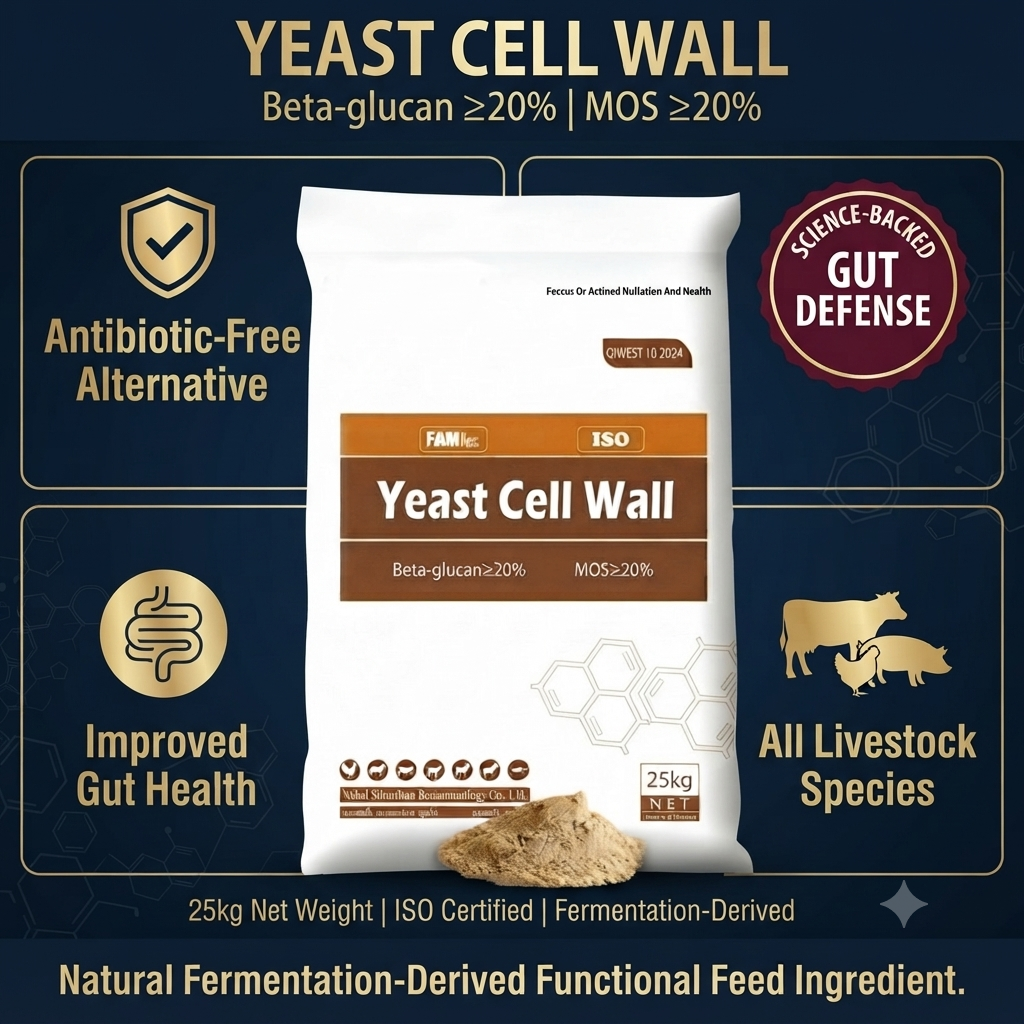
Product Positioning: Natural functional feed ingredient | A core...
Hotline+8613661236356
Product Details
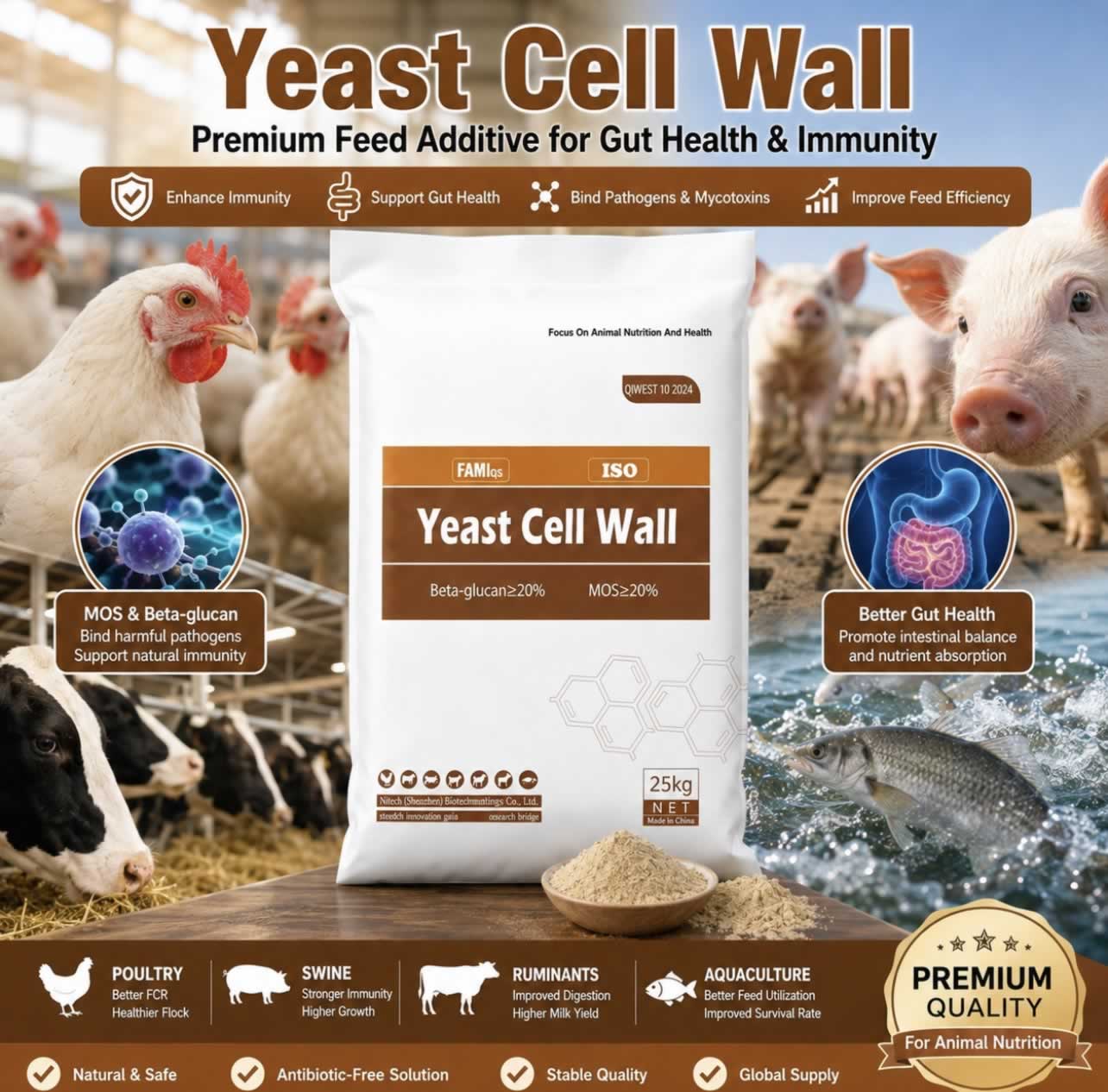
Yeast Cell Wall is a functional active ingredient extracted from yeast cells, composed primarily of polysaccharides such as mannan-oligosaccharides (MOS) and beta-glucans. Unlike protein-based ingredients focused on nutritional supply, the core value of Yeast Cell Wall lies in functional regulation — through specific biological mechanisms, it helps animals maintain gut health and boost immune function, making it one of the most scientifically well-supported functional additives amid today’s antibiotic-reduction policies.
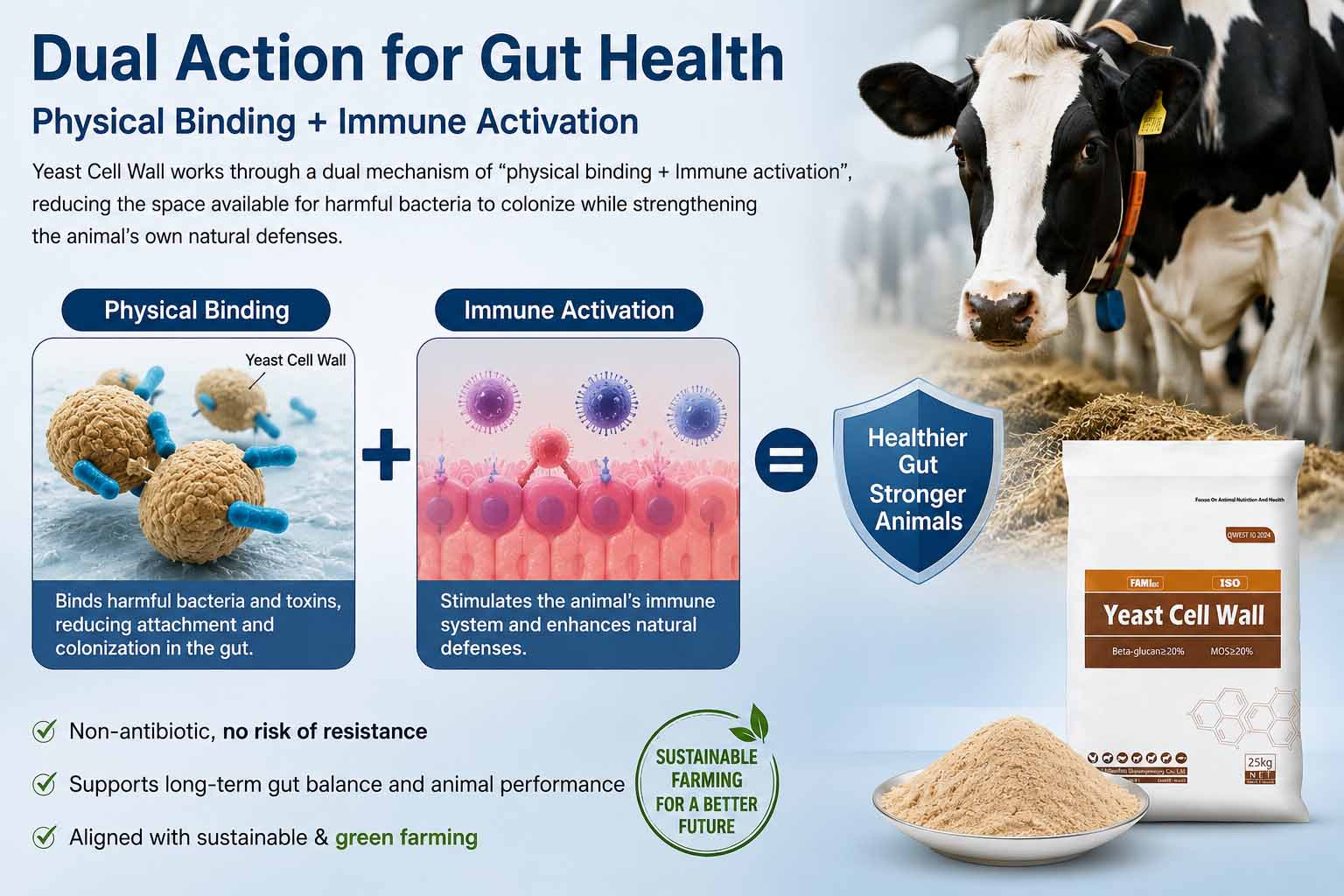
Yeast Cell Wall doesn’t work by killing bacteria. Instead, it operates through a dual mechanism of “physical binding + immune activation,” reducing the space available for harmful bacteria to colonize while strengthening the animal’s own natural defenses. This means long-term use does not lead to antibiotic resistance issues, making it well aligned with the industry’s shift toward greener, more sustainable farming.
| Core Component | Primary Function |
| Mannan-oligosaccharides (MOS) | Specifically bind to the fimbrial receptors of pathogenic bacteria such as E. coli and Salmonella, preventing them from colonizing the intestinal mucosa |
| Beta-glucans | Recognized by intestinal immune cells, activating macrophages and natural killer cells to strengthen non-specific immunity |
| Chitin and other polysaccharides | Support the construction of the intestinal mucosal barrier, helping maintain gut structural integrity |
The mannan-oligosaccharide structure in Yeast Cell Wall mimics the glycoprotein receptors found on the surface of intestinal epithelial cells. This “decoys” pathogenic bacteria carrying Type-1 fimbriae — such as E. coli and Salmonella — into binding preferentially to the MOS rather than attaching to the actual gut lining. These bound pathogens are then cleared out through normal intestinal motility, effectively suppressing pathogen colonization without the use of antibiotics.
Beta-glucans, meanwhile, bind to receptors on the surface of immune cells (such as Dectin-1), activating macrophages, natural killer cells, and other immune cells. This strengthens the animal’s non-specific defense against pathogens without triggering an excessive immune response.
This dual mechanism — “blocking pathogen colonization” combined with “activating natural immunity” — is what sets Yeast Cell Wall apart from traditional antibiotic-based additives. Rather than killing bacteria, it cuts off the pathway pathogens use to colonize the gut in the first place, while simultaneously strengthening the animal’s own defenses.
Weaning is the most vulnerable period for piglet gut health. Yeast Cell Wall effectively reduces the incidence of diarrhea during the weaning stress period, helping piglets transition more smoothly. It is also suitable for nursery and finishing pig diets as an ongoing gut health maintenance ingredient.
Suitable for broiler and layer diets, particularly during the early chick stage, where it helps establish a healthy gut microbiota structure and reduces the risk of pathogen colonization (such as Salmonella) — contributing positively to overall survival rates.
Serves as a supplementary ingredient for rumen and gut health management, particularly useful for young animals such as calves and lambs, helping establish a healthy digestive tract microbiome from an early stage.
Used in compound feed for fish, shrimp, and crab. The immune-enhancing effect of Yeast Cell Wall is particularly valuable in helping aquatic species cope with water quality fluctuations and stocking density stress, while also helping reduce disease incidence.
Clear, well-supported mechanism — MOS binds pathogens while beta-glucan activates immunity, with a traceable, evidence-based mode of action
No risk of antibiotic resistance — works through physical blocking and immune modulation rather than bacterial killing, so long-term use does not induce resistance
A genuine antibiotic-free solution — aligns with current antibiotic-reduction policy direction and serves as a core tool for farms transitioning to antibiotic-free production
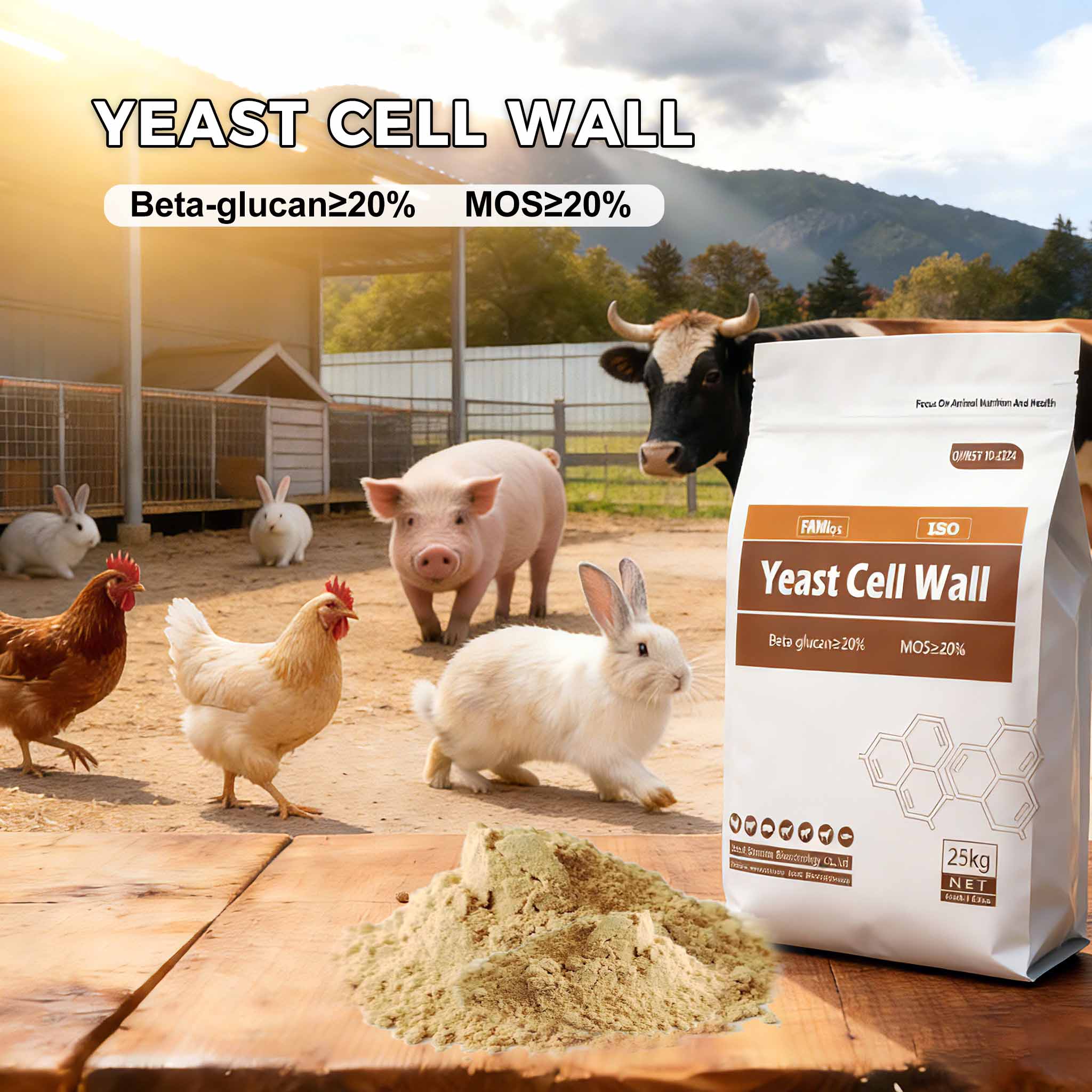
Universal across species — suitable for swine, poultry, ruminants, and aquaculture, particularly valuable during weaning, regrouping, and feed transition periods
Strong synergy with other functional ingredients — can be combined with probiotics, acidifiers, and other gut health additives to form a comprehensive gut health management program
Specific inclusion rates should be determined under the guidance of a professional feed nutritionist, based on species, growth stage, and stress risk level. Yeast Cell Wall is typically used as a functional supplementary component of the diet, and is especially recommended in the following scenarios:
Before and after weaning in young animals
During regrouping or feed transition periods
During high-disease-risk seasons or periods of unstable environmental conditions
When adjusting diet formulations to reduce antibiotic use
A small-batch trial is recommended before full-scale use, with the inclusion plan continuously refined based on observed animal growth performance and health status.
Q1: What’s the difference between Yeast Cell Wall and probiotic additives?
Probiotics work by directly supplementing the gut with beneficial bacteria, becoming part of the gut microbiota itself. Yeast Cell Wall works indirectly — by physically binding pathogens and activating the immune system. The two mechanisms are different and complementary, and can be used together.
Q2: Does long-term use of Yeast Cell Wall lead to resistance issues?
No. Yeast Cell Wall does not work by killing bacteria — it functions through physical binding and immune modulation, so there is no antibiotic-resistance-type risk associated with long-term use.
Q3: Can Yeast Cell Wall be used alongside antibiotics?
For specific treatment scenarios requiring antibiotics, consult a qualified veterinarian to determine the appropriate medication and inclusion plan. For everyday health maintenance, Yeast Cell Wall is better suited as a long-term alternative to antibiotic growth promoters.
Customized packaging options are available based on customer needs. Feed mills and farms interested in procurement or partnership are welcome to contact us for detailed product information, test reports, and application case studies
Previous article:Brewer’s Yeast Powder: A Natural, All-Species Protein Solution — Product Application Guide
Next article:Global Yeast Cell Wall Market Insights: Regulatory Shifts and Growth Trends
Related Recommendations